



There is a particular kind of person who has tried six to-do apps in a year and ended up back in a notebook. I understand this person because I have been this person.
The notebook is not better in any grand philosophical sense. It is just there. It takes “call the plumber” without demanding a migration strategy or a project hierarchy first, and after three weeks away it does not greet you with a museum of old intentions.
Most productivity apps are pleasant at the beginning. The first week feels like a new desk. Then the system asks to be fed: projects, areas, tags, due dates, filters, recurring tasks, contexts, templates, views, reviews. You end up drafting a small constitution for the person you hoped you would become.
Then life happens and the app goes quiet. You return later, tired and behind, to a pile of old tasks that are technically still yours. That return is where a lot of systems fail.
Setup cost is a real cost
A planning tool should not require a personal audit before it accepts the first task. Keeping setup low takes seriously the state people are usually in when they return: behind, interrupted, and in no mood to design an ontology.
Slate’s free tier works without an account because I wanted the first moment to be plain. You open it and type a task. If it belongs in the week, place it there; if not, it can wait in the Idea Backlog. That is enough to begin, and the app never asks for your job title before it can hold a task.
The first session should not be a ceremony
A cold start in Slate should feel almost suspiciously simple: add a task, add another, drag one to Wednesday, leave the vague one in the Idea Backlog, close it. That will not turn anyone into an optimized person, which was never the offer. It is enough to know where the next piece of work lives, and plenty of tools make you earn even that much.
Not everything deserves a place yet
One reason people abandon to-do apps is accumulation. The app turns every captured thought into a standing obligation, and after a while the list reads less like a plan than an archive of things you once meant to do.
Slate separates capture from commitment. The Idea Backlog holds the rough material: half-formed ideas, fragments, things you might do someday but are not ready to schedule. The weekly slate holds the work you have actually chosen for the week.
That separation makes restarting less dramatic. You do not have to clean the whole house before you can cook dinner. Look at the Backlog, pull out what still matters, and leave whatever has gone cold until you have the patience to judge it. The aim each time you return is modest: make the next few days legible.
A missed week should not punish you twice
If I do not use a planning app for three weeks, I already know what happened. I do not need the app to perform disappointment. Yet many systems answer absence with a backlog of red: tasks that were only ever guesses show up as overdue, old plans sit around as administrative debris, and the first session back is apology processing rather than planning.
Slate is designed to absorb absence more gently. Undone tasks can roll forward without turning into moral evidence. Work that clearly does not belong in the week can move back to the Idea Backlog, and dead tasks can be deleted and recovered later if needed.
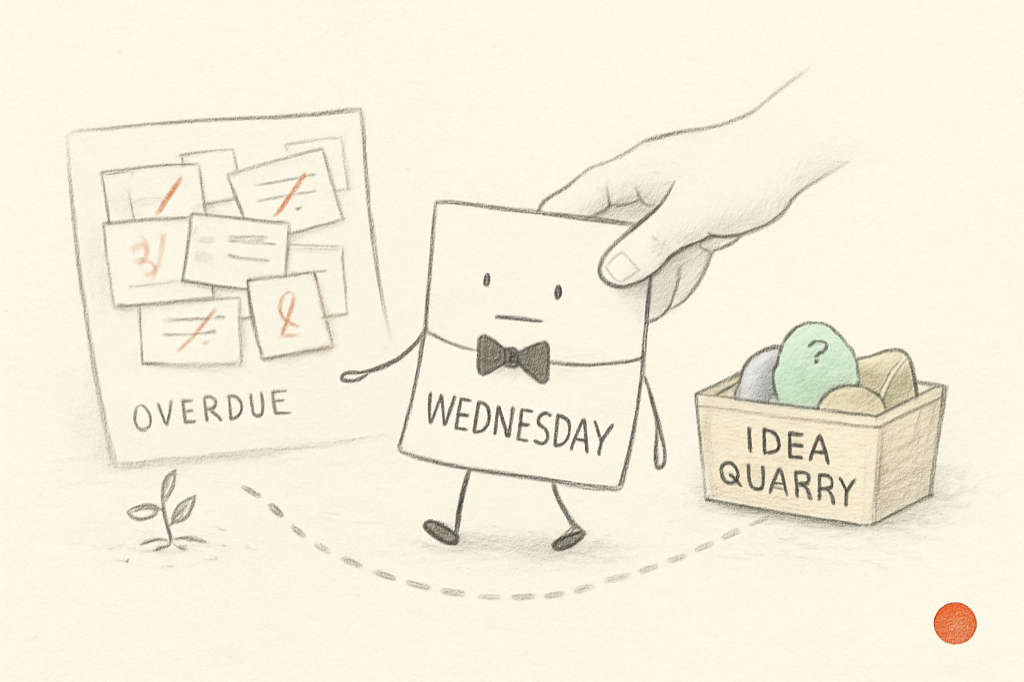
That gentleness is structural rather than motivational.
A planning tool that cannot survive the user having a life is a compliance device.
The three-minute restart
Here is the restart I care about.
Minute one: empty the obvious thoughts into the Idea Backlog. Do not polish or classify anything, just get it out.
Minute two: pick the two or three tasks that clearly belong this week and drag them into the weekly slate.
Minute three: delete one stale item, or move it out of the week.
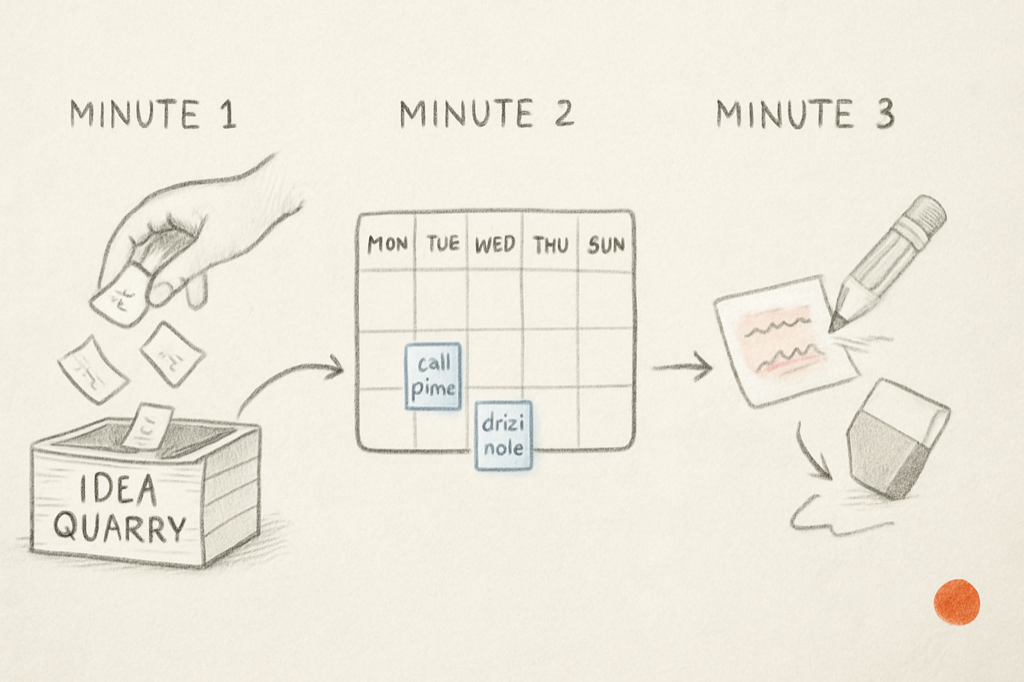
That is it. If you have more time, keep going; if not, the system is already useful again. This is the standard I want Slate to meet: coming back should not mean negotiating with your past self.
People who restart to-do apps are rarely short on systems. Some have had too many, which is why one more architecture to inhabit tends to go nowhere. What helps is a surface that takes the week as it comes, gaps and all, and still gives you something to shape.